
November 22, 2026
0 comments


Quick Summary
The best diamond carat size depends on your finger width rather than carat weight alone. Measure the visible width of your finger at the knuckle, then choose a stone that covers most of that width without extending past its edges. Shape also changes how large a stone looks on the hand.
- Measure finger width at the knuckle in millimetres, not just ring size.
- A 1 carat round is about 6.5mm across and covers around 41 per cent of a 16mm finger.
- Elongated shapes such as ovals spread further across the finger than a round of equal carat.
- Ask for millimetre dimensions alongside carat weight to compare stones accurately.
- Compare sizes on your own hand in person, since photographs can mislead.
Table of Contents
- How Carat Weight Affects a Diamond's Apparent Size
- How to Measure Your Finger for Diamond Proportion
- Diamond Size on Finger by Carat: 0.5, 1, 1.5, 2 and 3 Carat Compared
- How Diamond Shape Changes Perceived Size on the Hand
- Matching Diamond Size to Finger Width and Hand Proportions
- How Setting, Band Width and Budget Affect the Final Look
- Try Sizes On Before You Commit: Virtual and In-Store Options
- Frequently Asked Questions
How Carat Weight Affects a Diamond's Apparent Size
Carat measures weight, not size. Two diamonds of the same carat weight can look noticeably different across the finger, which is why the diamond carat size you see on the hand depends on how the stone is cut. A deep cut sits smaller on the hand, while a shallow cut spreads its weight wider. Understanding this difference is the first step to choosing well at Starfire Jewellery.
The reason lies in how weight is distributed. A diamond's carat weight is fixed, but its face-up dimensions depend on proportions. A well-proportioned round brilliant of 1 carat measures roughly 6.5mm across, while an elongated shape of the same weight can sit noticeably longer on the finger. Carat alone therefore tells you very little about what your partner will see on the hand.
Many buyers focus on the carat number and overlook the measurements. Asking for the millimetre dimensions alongside the carat weight gives a far more accurate picture of the final look.
How to Measure Your Finger for Diamond Proportion
Finger size and width shape how any diamond appears, so measuring the finger is a practical step before choosing a centre stone. Most buyers stop at ring size, but ring size describes circumference, not the visible width of the finger where the stone will sit. That width is what determines how much of the finger a diamond covers, and coverage is the single biggest driver of whether a stone reads as balanced or oversized.
Measure two things. First, wrap a strip of paper or string around the base of the finger, mark the overlap and measure the length in millimetres to confirm ring size. Second, lay a ruler across the top of the finger at the knuckle and record the visible width in millimetres. Repeat both at a consistent time of day, because fingers swell with heat, salt and late afternoons, and allow a small margin so the finished ring is not tight in summer.
Once you have the finger width, use a coverage target rather than a carat number.
Watch out: measuring only ring size and ignoring finger width is the most common reason a stone that looked right in a photo feels too large or too small on the hand. Record both numbers before you shortlist carat sizes, and re-measure if the finger width and ring size seem inconsistent.
Diamond Size on Finger by Carat: 0.5, 1, 1.5, 2 and 3 Carat Compared
Carat sizes look very different once they sit on a hand, and the difference is best understood in millimetres rather than carats. The figures below are typical face-up widths for well-proportioned round brilliants; elongated and square shapes of the same carat weight will spread differently, which is covered in the shape section below.
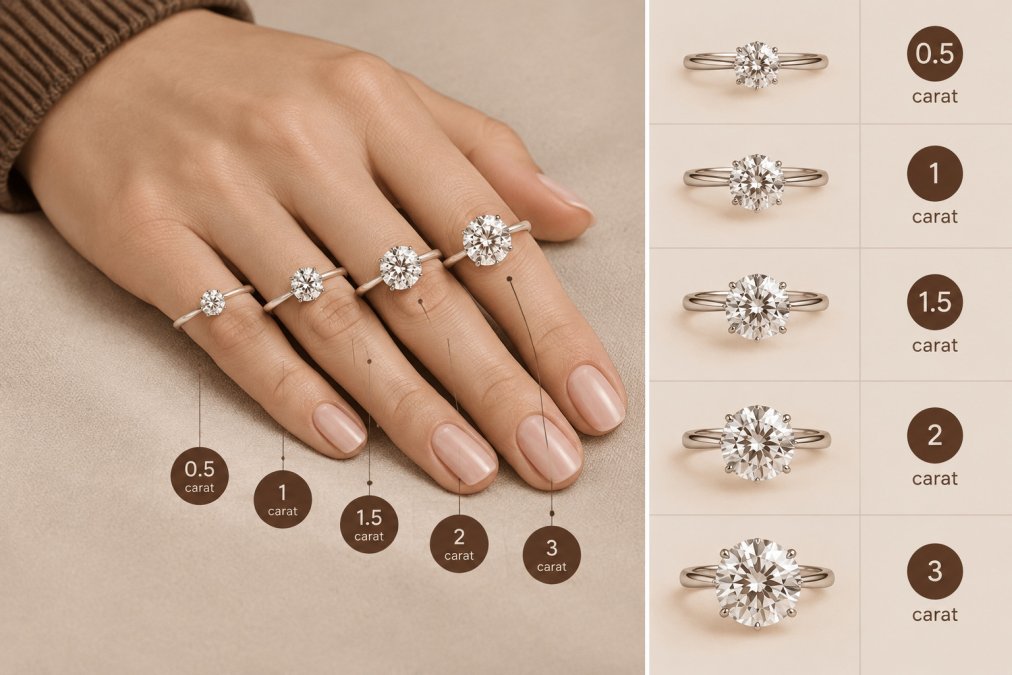
| Carat weight | Typical round face-up width | Approx. coverage on a 16mm finger | How it reads on the hand |
|---|---|---|---|
| 0.5 ct | About 5.1mm | Around 32 per cent | Delicate and understated; suits slender fingers and everyday wear |
| 1.0 ct | About 6.5mm | Around 41 per cent | The most common reference point; balanced on most hand sizes |
| 1.5 ct | About 7.3mm | Around 46 per cent | Noticeably present; a confident but still wearable statement |
| 2.0 ct | About 8.1mm | Around 51 per cent | Bold; best on wider fingers or where a statement is wanted |
| 3.0 ct | About 9.3mm | Around 58 per cent | Commands attention; needs a larger hand or a deliberate oversized look |
These coverage figures assume a 16mm finger width and will shift with finger size. On a 14mm finger the same 1 carat stone covers closer to 46 per cent and reads larger; on an 18mm finger it covers around 36 per cent and reads smaller. That is why the same carat weight can feel perfect on one hand and underwhelming on another.
Shape changes the numbers materially. An oval of 1 carat often measures around 7.7mm by 5.7mm, so its long axis spreads further across the finger than a round of the same weight. A pear or marquise pushes length even further, while a cushion or princess cut concentrates weight into a squarer face that can read slightly smaller than a round of equal carat. When you compare a 1 carat oval with a 1 carat round, you are not comparing like with like unless you look at the millimetre dimensions.
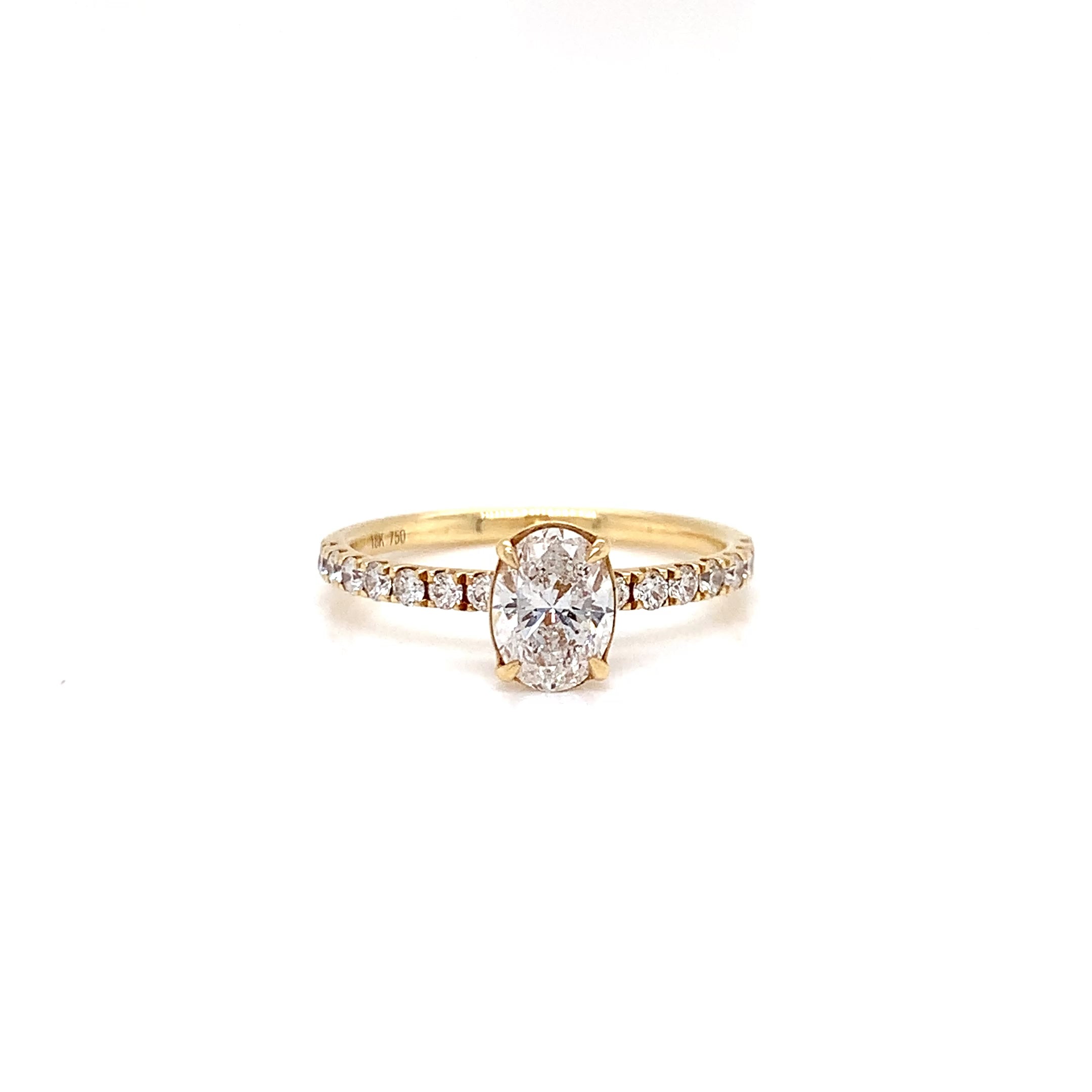
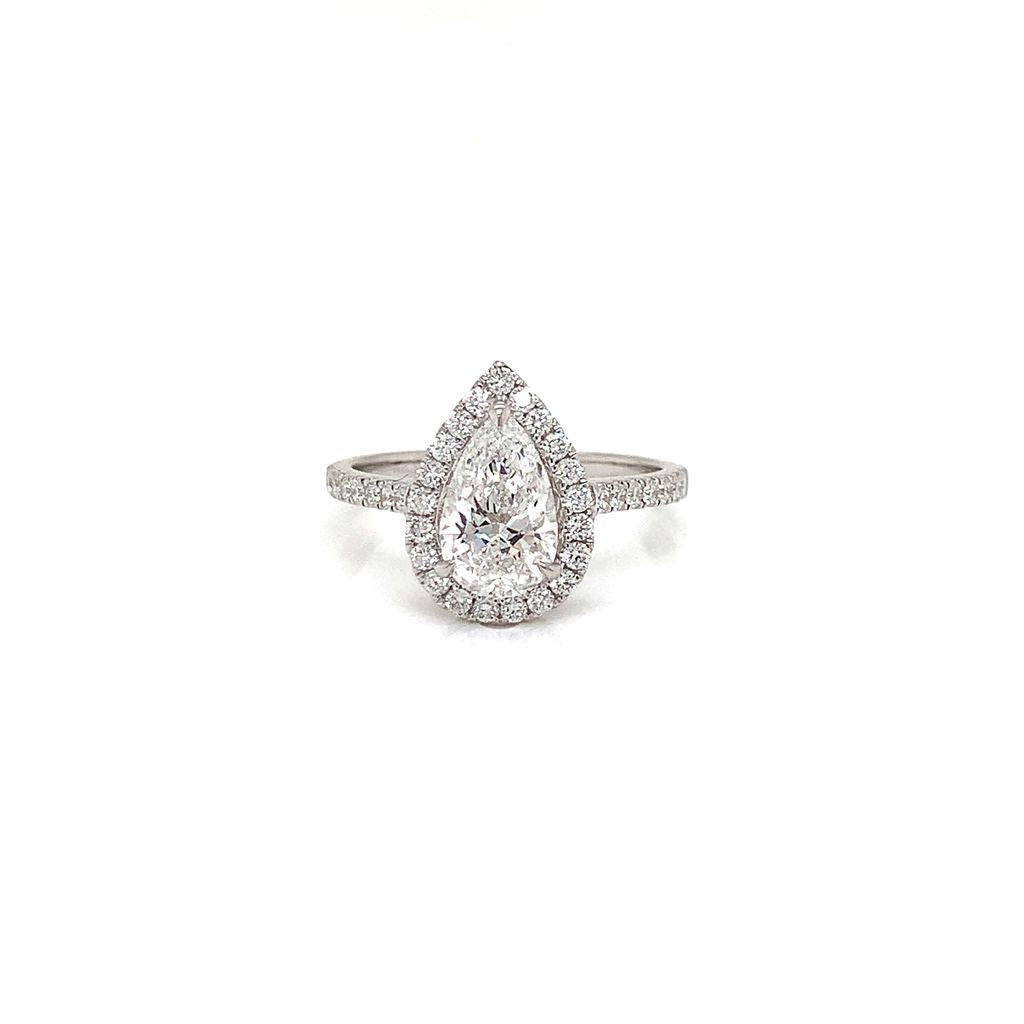
A useful way to compare is to view each size against your own finger rather than a photograph. Starfire Jewellery's engagement ring collection includes centre stones across this range, including the Oval Grace at 0.76 carats and the Infatuation at 1.02 carats.
Carat Weight Versus Face-Up Dimensions
Face-up dimensions tell you more than carat weight. Two 1 carat diamonds can differ in millimetres because of their cut proportions, so comparing the measurements in millimetres when shortlisting stones gives a clearer picture than carat weight alone.
How Diamond Shape Changes Perceived Size on the Hand
Shape has a large effect on how big a diamond appears. Elongated shapes such as ovals, pears and marquise cuts create the illusion of length, which can make a stone look larger than its carat weight suggests.
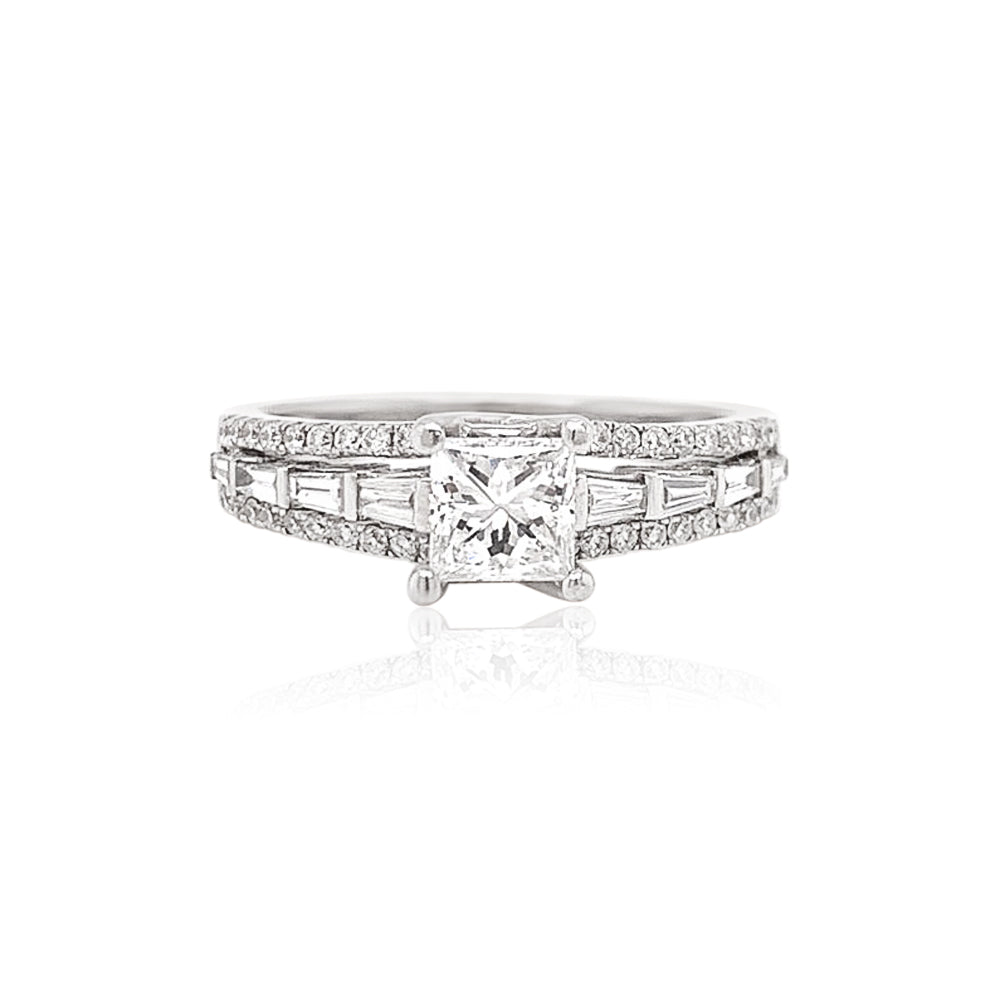
The Juliet Square Princess Cut Diamond Engagement Ring Setting is one example of how a square outline reads differently from a round stone of similar weight. Shape is a matter of personal taste, but choosing one that suits your finger's proportions helps create a balanced appearance.
Matching Diamond Size to Finger Width and Hand Proportions
The best size is one that sits in balance with the hand. A wide finger carries a larger stone comfortably, and a slim finger suits a moderate centre diamond that does not overwhelm it. Hand length matters too: longer fingers can carry elongated shapes well, while shorter fingers often look best with a round or cushion cut.
Our suggestion is to consider finger coverage first, then the look you want. A stone that covers most of the finger's width without extending past its edges usually looks most flattering. You can browse natural diamonds to find stones matching the proportions you've measured. You can see how different settings frame a centre stone to compare the final look.
How Setting, Band Width and Budget Affect the Final Look
The setting and band change how large the centre stone appears. A low, minimal setting lets the diamond sit closer to the finger, while a raised setting or halo adds visual size. A thinner band keeps the focus on the stone, whereas a wider band can make the whole ring feel heavier.
Budget also shapes the choice. For a fixed spend, a slightly smaller stone in a refined setting can look more polished than a larger stone in a basic one. Starfire Jewellery's Princess Reflection, priced at $9,400.00 AUD, features a 0.61 carat princess cut with tapered baguette shoulders.
Try Sizes On Before You Commit: Virtual and In-Store Options
Measurements and photographs are useful, but seeing a stone on a hand gives the most reliable read on diamond carat size. Visiting in person lets you compare sizes against your own finger under natural light.
Browse our Diamond Engagement Rings Brisbane range before you decide.
Choosing the right carat size comes down to finger proportions, shape, setting and budget working together. Starfire Jewellery can guide you through each decision, so book a consultation to find the stone that suits your hand.
Frequently Asked Questions
What diamond carat size looks best on a hand?
There is no single best size. Most people find that a 1 to 2 carat centre stone sits in proportion on an average hand, while smaller hands often look best with a 0.5 to 1 carat stone and larger hands can carry 2 carats or more without looking out of place. Carat weight is only part of the picture, because cut, shape and setting all change how big the stone appears. The most reliable way to decide is to try on several sizes and see which one feels balanced on your own finger.
Does diamond shape change how big a stone looks on the hand?
Yes. Elongated shapes such as oval, pear and marquise often look larger than a round diamond of the same carat weight, because their spread covers more of the finger's surface. Round brilliant diamonds distribute their weight in a compact face, so they can look smaller at the same carat. Shape therefore affects the visual impression of size, and it is worth comparing shapes side by side before choosing a carat weight.
How can I preview different diamond sizes on my hand?
Start with a virtual try-on or a scaled image that shows a stone at its real millimetre dimensions on a hand. Then try on physical samples or a selection of rings in a showroom, wearing them for a few minutes at a time. Starfire Jewellery's catalog includes the Oval Grace at $7,750.00 and the Elita at $16,500.00.
Will a larger diamond look better on short or wide fingers?
A larger centre stone can suit wider fingers because it covers the finger in proportion, while very large stones on slender fingers can look top-heavy. Elongated shapes can also create the illusion of length on shorter fingers. Measuring your finger width and comparing it with the stone's face-up dimensions gives a clearer answer than relying on carat weight alone.

Related post

How Many Ring Design Revisions Are Included in a Custom Ring

7 Steps to Choosing an Ethically Sourced Anniversary Necklace

7 Steps to Design Your Own Engagement Ring Online
What Diamond Carat Size Looks Best on Your Hand

Best Ethical Engagement Rings Australia: A Practical Buying Guide
