
November 16, 2026
0 comments


Last Updated: November 15, 2026
Quick Summary
To choose an ethically sourced diamond, verify the stone's journey from mine to ring with a documented chain of custody, and confirm fair labour, environmental care and third-party verification, not just a conflict-free label. Treat Kimberley Process conflict-free certification as the minimum, then ask harder questions about human rights, mining standards and environmental impact.
- Conflict-free is the floor, not the ceiling: it proves a stone did not fund armed conflict, nothing more.
- Ask for the grading report and match its report number to the stone and the invoice.
- Lab-grown stones have lower and less predictable resale value than mined stones.
- A carbon-neutral claim should name the certifier, standard and emissions boundary measured.
- Get the origin claim in writing on your invoice, naming the specific country or facility.
Want a diamond you can actually trace?Starfire Jewellery sources certified, beyond conflict-free diamonds and guides you through every certificate.
Book a Consultation
Table of Contents
- What Makes a Diamond Ethically Sourced
- Ethical Diamond Sourcing: From Mine to Ring
- Conflict-Free Diamonds: What the Label Actually Proves
- Lab-Grown Diamond Engagement Rings Compared to Mined Stones
- Diamond Origin Certification: How to Verify It Yourself
- The Greenwashing Trap and the Carbon Footprint Question
- Questions to Ask Your Jeweller Before You Buy
- Book a Consultation to Source Your Ethical Diamond
- Frequently Asked Questions
What Makes a Diamond Ethically Sourced
An ethically sourced diamond is one where you can trace its journey from the mine to your ring, and where every hand it passed through was treated fairly.
The term ethical diamond sourcing covers more than a certificate. It is a set of promises about people, places and proof.
Here is what sits under the label:
- Human rights: no forced labour, no child labour, fair wages
- Environmental care: land rehabilitation, water use, carbon footprint
- Traceability: a documented path from rough stone to finished ring
- Verification: third-party checks, not just the seller's word
Diamonds are also graded and certified independently, which is where diamond origin certification comes in. First, you need to know why two labels that sound the same are not.
Conflict-Free vs Ethically Sourced: The Difference That Matters
Conflict-free is the floor, not the ceiling. A conflict-free diamond is one that has not funded armed conflict, as defined by the Kimberley Process.
Think of it this way. Conflict-free tells you the stone did not pay for a war.
That gap is where most confusion lives. A jeweller can legally call a stone conflict-free and still know nothing about how the mine treated its workers. So when you shop, ask about both.
Ethical Diamond Sourcing: From Mine to Ring
Every diamond starts as a rough stone in the ground or a lab. Ethical sourcing is the practice of tracking that stone through every stage and proving each step was fair. The hard part is not the mining. It is the handoffs in between.
A typical path runs like this:
- Rough stone is mined or grown
- It moves to a cutter and polisher
- It is graded and certified
- A jeweller sets it into a ring
Each handoff is a place where paperwork can go missing. That is why supply chain transparency matters more than any single certificate.
Supply Chain Transparency and Chain of Custody
Chain of custody is the documented record of who held the diamond and when. Supply chain transparency is how openly the seller shares that record with you.
A strong chain of custody names each stage and backs it with paperwork.
Our founder Shweta Khan is a diamond specialist with over 25 years in the diamond industry, and she is able to source any diamond for the client through her diamond wholesale business.
Conflict-Free Diamonds: What the Label Actually Proves
Conflict-free diamonds are certified under the Kimberley Process, a global scheme that aims to stop rough diamonds from funding rebel groups. The label proves one thing: the stone is not a conflict diamond.
That is the honest limit of the label. It is a starting point, not a finish line.
So treat "conflict-free" as the minimum you should accept. Then ask the harder questions about human rights, mining standards and environmental impact.
Lab-Grown Diamond Engagement Rings Compared to Mined Stones
Lab-grown diamonds have the same physical and chemical properties as mined diamonds. They are grown in a lab rather than dug from the earth, which makes the origin question simpler.
The trade-offs are real. Lab-grown stones have lower resale value than mined stones, often dramatically so, because lab-grown supply is expanding and secondary-market demand is thin. Some buyers also prefer the romance of a natural stone. Neither choice is wrong.
| Feature | Lab-Grown | Mined |
|---|---|---|
| Origin traceability | Easier to verify; growth facility is documented | Depends on paperwork and chain of custody |
| Price | Lower at retail | Higher at retail |
| Resale value | Lower and less predictable | Higher, though still below retail |
| Energy use | Energy-intensive growth, often grid-dependent | Diesel-heavy extraction and haulage |
| Land and water disturbance | Minimal | Significant at mine site |
| Chemical makeup | Identical | Identical |
| Certification | Same grading labs apply | Same grading labs apply |
The Carbon Footprint Question, End to End
The carbon comparison is where most articles stop at "lab-grown is greener." That is too simple.
Neither is zero. A seller who claims a "carbon-neutral diamond" should be able to show how, which certifier, which standard, which boundary of emissions was measured.
Watch out: a common pattern is to quote a single headline figure ("90% less carbon") without stating whether it covers growth only, or growth plus cutting, polishing, transport and setting.
Resale Value and the Financial Trade-Off
Resale is the part of the ethical-diamond conversation most guides avoid. Mined diamonds generally resell for less than retail, because retail margins and grading premiums are not usually recovered on the secondary market.
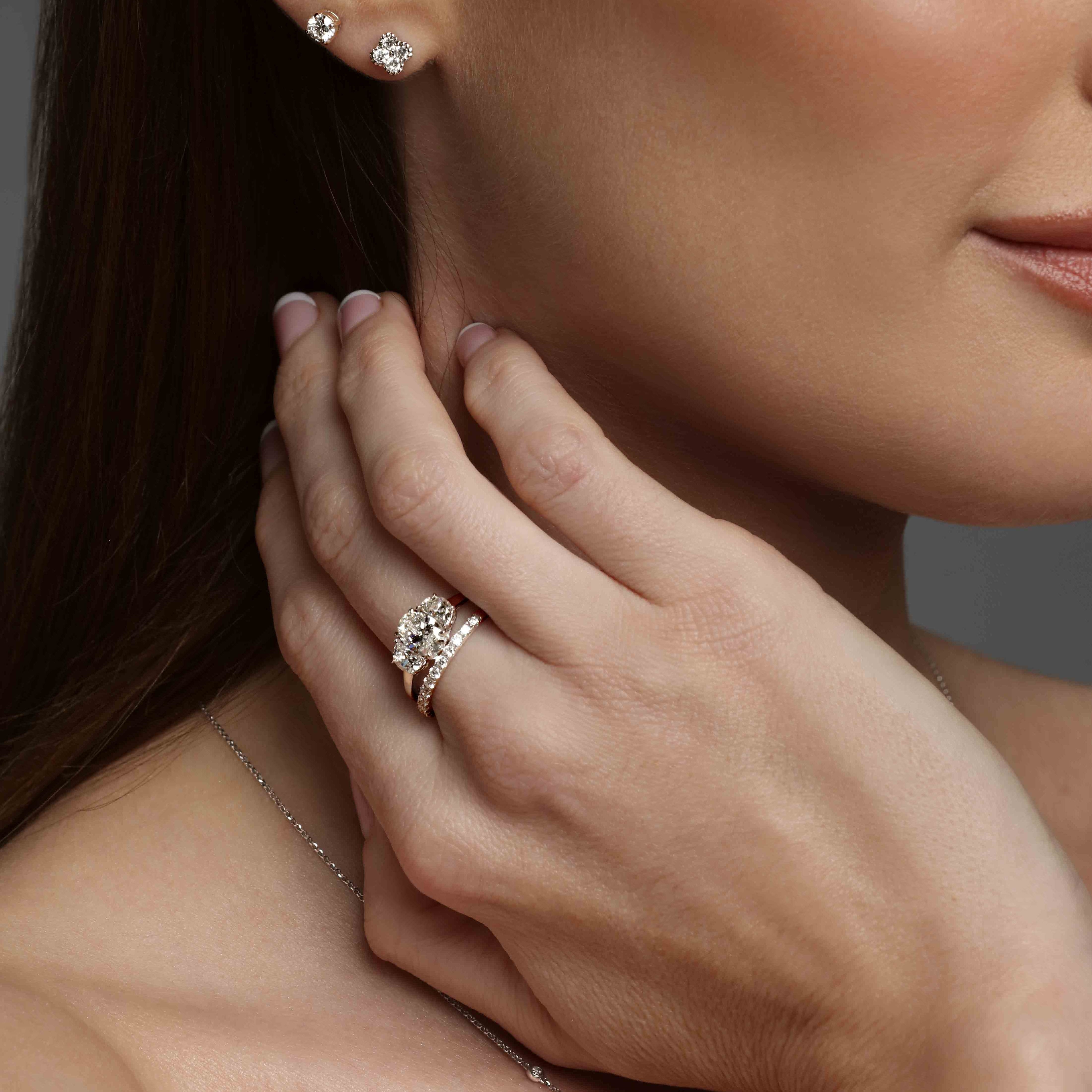
A good jeweller will show you both without pushing. For example, our Arisen Oval Trilogy features a 1.04 carat certified lab-grown oval diamond in 18kt white gold, complemented by two half-moon lab diamonds totalling 0.52 carats.
Diamond Origin Certification: How to Verify It Yourself
Diamond origin certification is independent proof of where a stone came from and how it was graded. The most recognised grading reports come from GIA and similar labs.
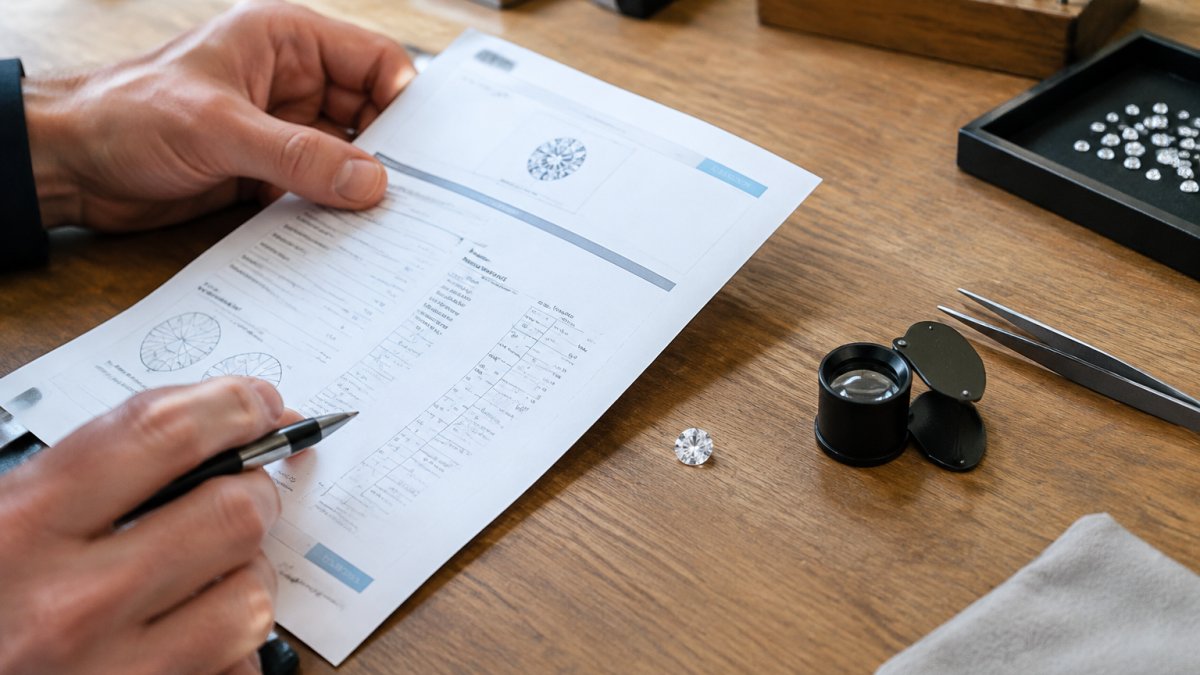
You do not need to be an expert to check one. You need to know what each document proves, and what it does not.
What Each Document Actually Proves
- Grading report (e.g. GIA): proves the stone's 4Cs, cut, colour, clarity, carat, and usually includes a plotting diagram of inclusions. It does not, on its own, prove ethical sourcing.
- Kimberley Process certificate: proves the rough diamond was shipped through a scheme designed to exclude conflict diamonds. It does not prove fair wages, mine rehabilitation or low carbon.
- Chain-of-custody record: proves who held the stone at each stage. Its value depends entirely on whether each handoff is independently audited or self-declared.
- Responsible-sourcing certification (e.g. Responsible Jewellery Council membership): proves the business has been audited against a published standard. Check the scope, a member's certification may cover some operations and not others.
- Invoice origin statement: proves only what the seller is willing to put in writing. It is useful precisely because it is contractual.
Your Verification Checklist Before You Commit
Run through this list before you pay a deposit:
- Ask for the diamond grading report and match its report number to the stone and to the invoice
- Confirm the report comes from a recognised lab, not the seller, and check the report number on the lab's own website
- Ask for written provenance and the chain of custody, and ask which stages are independently audited
- Check whether the stone is Kimberley Process certified, and understand that this is a floor not a ceiling
- Ask what third-party certification covers labour and environment, and request the certificate scope
- Get the origin claim in writing on your invoice, with the specific country or facility named
- Confirm the metal source, including recycled gold if offered, and ask for the refiner's certification
- Ask what happens if a certificate turns out to be false, a written remedy is a real signal
If a seller cannot answer these, that is your answer. Walk away. The Kimberley Process official site explains what the scheme does and does not cover, and it is worth reading before you shop.
Spotting the Greenwashing Trap
Greenwashing is when a seller uses vague green language with no proof behind it. The tell is almost always the same: a claim with no certifier, no standard and no document.
Watch out: a common pattern is a certificate that is real but out of scope, for example, a business-level sustainability certification displayed as if it certified the specific stone.
The Responsible Jewellery Council sets standards for responsible sourcing across the trade.
The Greenwashing Trap and the Carbon Footprint Question
The greenwashing trap is when a seller uses vague green language with no proof behind it. Words like "eco-friendly" and "sustainable" mean little on their own.
Carbon footprint is the clearest example. A mined diamond carries emissions from digging, hauling and processing. A lab-grown stone uses energy, but far less land and water.
Here is how to spot the difference between a claim and proof:
- Real proof names a certifier and a standard
- Real proof is specific, not just "green" or "clean"
- Real proof appears in writing, not only in conversation
The Responsible Jewellery Council sets standards for responsible sourcing across the trade. A member jeweller who follows them can show you the paperwork.
Questions to Ask Your Jeweller Before You Buy
The right questions turn a sales chat into a real test. Ask these before you commit to any stone:
- Can you show me the grading report for this exact diamond?
- Where was this stone mined or grown, and can you prove it?
- Is the stone Kimberley Process certified?
- What does your sourcing policy say about labour and human rights?
- Do you use recycled gold or precious metals with a known source?
- What happens if the certification turns out to be false?
A jeweller who answers clearly and without flinching is the one to trust. If you are still narrowing down where to shop, our guide on finding the right jewellery store near you walks through how to judge a local showroom before you visit.
Book a Consultation to Source Your Ethical Diamond
Choosing an ethically sourced diamond engagement ring comes down to proof, not promises. The more a jeweller can show you in writing, the more confident you can be in the stone on your finger.
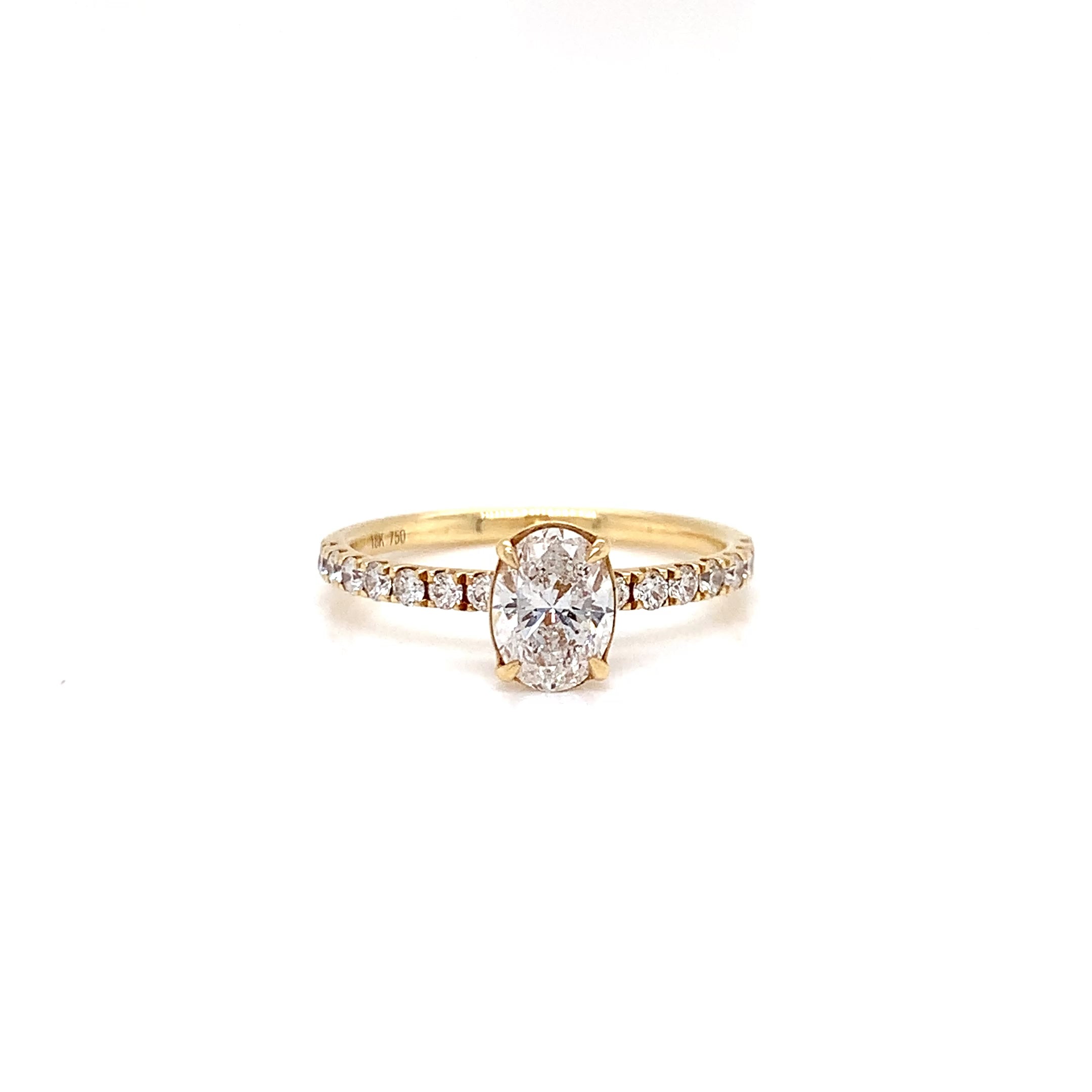
At Starfire Jewellery, we source beyond conflict-free diamonds and trace each stone through our wholesale network. You can see the kind of ethically sourced ring we create by exploring the Arisen Oval Trilogy or the Oval Grace, both set with certified stones.
Get started with Starfire Jewellery and design a ring you can trace from mine to hand.
The hardest part of ethical diamond shopping is not finding a beautiful stone. It is finding a jeweller who will show you the proof.
Frequently Asked Questions
How can I check where a diamond comes from?
Ask for the diamond grading report and any origin documentation the jeweller holds. A GIA report confirms the stone's identity and grading, while provenance paperwork traces the rough diamond back to a known source. Request the Kimberley Process certificate for mined stones and ask whether the supplier can name the mine or cutting centre. A jeweller with genuine ethical diamond sourcing will answer without hesitation and show you the paperwork before you commit.
Are lab-grown diamonds more ethical than mined diamonds?
Lab-grown stones avoid the land disturbance and community displacement linked to large-scale mining, and they carry a shorter supply chain that is easier to trace. That does not make every lab-grown diamond automatically ethical: you still want third-party certification and a supplier who can document provenance. Many couples choose lab-grown diamond engagement rings for the transparency, then confirm the grading report and the jeweller's sourcing policy before buying.
What questions should I ask a jeweller about diamond sourcing?
Ask where the rough diamond was mined or grown, which cutting centre handled it, and which certifications accompany it. Request the Kimberley Process certificate for mined stones and the grading report for every centre stone. Ask whether the metal is recycled gold and whether the jeweller audits its suppliers. Finally, ask what happens if the documentation does not match the stone. A specialist who sources diamonds directly should answer all of these clearly.
What should I look for in an ethical diamond certificate?
Look for a grading report from a recognised laboratory such as GIA, which confirms carat, colour, clarity and cut, plus a laser inscription on the girdle that matches the report number. For mined stones, check the Kimberley Process certificate and any provenance statement naming the source. For lab-grown stones, confirm the report states the growth method. Together these documents give you diamond origin certification you can verify independently before the ring is set.

Related post

How Many Ring Design Revisions Are Included in a Custom Ring

7 Steps to Choosing an Ethically Sourced Anniversary Necklace

7 Steps to Design Your Own Engagement Ring Online

What Diamond Carat Size Looks Best on Your Hand

Best Ethical Engagement Rings Australia: A Practical Buying Guide
