
November 06, 2026
0 comments


Last Updated: November 5, 2026
Quick Summary
Yes, you can wear a wedding band alone. Wearing a wedding band alone is entirely acceptable, and a growing number of married people choose exactly that, since a solo band still signals commitment clearly and suits people who prefer a clean look, work with their hands, or never wanted an engagement ring.
- A low-set band worn alone clears hazards for nurses, chefs, mechanics, physiotherapists and tradies.
- In Australia, the traditional placement for a wedding band is the ring finger of the left hand.
- A slightly wider band looks intentional alone, where a very narrow one can look like a spacer ring.
- Measure at the end of the day, because fingers are smallest in the morning and swell through the day.
- Clean the band weekly with mild soap and a soft brush, and have it professionally checked once a year.
Table of Contents
- Is It Acceptable to Wear a Wedding Band Alone?
- Why People Choose Wearing a Wedding Band Without an Engagement Ring
- Which Hand to Wear a Wedding Band On
- Wedding Band Styles for Wearing Alone
- Wedding Band Fit and Sizing When Worn Solo
- Daily Wear, Care and Safety for a Solo Band
- Choosing Your Solo Wedding Band at Starfire Jewellery
- Frequently Asked Questions
Is It Acceptable to Wear a Wedding Band Alone?
Yes. Wearing a wedding band alone is entirely acceptable, and a growing number of married people choose exactly that. A wedding band alone still signals commitment clearly, and it suits people who prefer a clean look, work with their hands, or never wanted an engagement ring.
Below, we cover the etiquette, the styles that work best, and how to get the fit right.
Most guides treat a solo band as a compromise. It isn't, a well-chosen band worn alone is a complete piece of jewellery.
Why People Choose Wearing a Wedding Band Without an Engagement Ring
Choosing to wear a wedding band without an engagement ring is a normal, personal decision made for practical reasons, style reasons, or both. No rule requires two rings.
Practical and Lifestyle Reasons
Hands-on work is the most common driver. Nurses, chefs, mechanics, physiotherapists and tradies often find a raised engagement ring catches on gloves, equipment or tools. A low-set band worn alone clears those hazards.
Other everyday reasons include:
- Comfort: one ring sits flatter and feels lighter on the finger
- Safety: fewer protruding stones near machinery or during sport
- Simplicity: one purchase, one decision, less to maintain
A common mistake is buying a slim, delicate band for solo wear. Worn alone, a very thin band can look lost on the hand and wears faster over years of daily use.
Personal and Relationship Reasons
Some people never wanted an engagement ring, a valid preference, not a statement about the relationship. Others keep an heirloom ring for special occasions and wear a plain band day to day.
Couples who marry quickly, or put money toward a home instead, often start with bands and add rings later.
Which Hand to Wear a Wedding Band On
In Australia, the traditional placement for a wedding band is the ring finger of the left hand. That custom carries through most Western traditions, but it is a convention rather than a rule, and a meaningful number of married people wear a band on the right hand instead. When a band is worn alone, the practical consequences of that choice matter more than they do for a stacked set.
The left-hand convention and where it comes from
The left ring finger convention is usually traced to the Roman belief in the vena amoris, a vein said to run directly from that finger to the heart.
That default is not universal, and it is worth knowing how much it varies:
- Right-hand traditions: in parts of Eastern Europe, Scandinavia, Spain, Portugal, India and parts of Latin America, the wedding ring is traditionally worn on the right hand. Couples with family ties to those regions often honour the family custom over the local default.
- Cultural and religious variation: some Hindu, Jewish and Orthodox Christian traditions have their own conventions for hand and finger, and some married people wear the ring on a chain rather than a finger.
- Men's conventions: men's wedding bands have historically been worn on the left ring finger in Australia, but right-hand wear is common among men with European family backgrounds and among left-handed wearers.
If you are choosing between hands, the left ring finger is the safe default for being read as married in Australia, and the right hand is a valid personal or cultural choice that some people will misread.
How hand choice affects fit and wear
The hand you choose has real consequences for fit and long-term wear, and this is where most guides stop short.
Dominant hand versus non-dominant hand. Your dominant hand does more work, gripping, lifting, typing, opening, and takes more knocks.
Finger swelling through the day. Fingers swell and shrink with temperature, hydration, salt intake and activity, and the dominant hand often swells slightly more because it is used more.
Knuckle shape. The ring has to pass the knuckle and then sit snug at the base of the finger.
A practical way to decide
If you are undecided, work through these in order:
- Start with tradition if being read as married matters to you, left ring finger is the Australian default.
- Check your family custom if you have cultural or family ties that place the ring on the right hand; honouring that is a legitimate reason to break with the local convention.
- Consider your dominant hand if you work with your hands, lift weights, or do a lot of manual tasks, the non-dominant hand will wear the band less.
- Try both hands for a week with a cheap temporary ring or a ring sizer before you commit to a final size.
- Size for the hand you will actually wear it on, not the hand you think you should wear it on.
The short version: the left ring finger is the convention, the right hand is a valid choice, and the hand you pick should be the one you will comfortably wear the band on every day for decades.
Wedding Band Styles for Wearing Alone
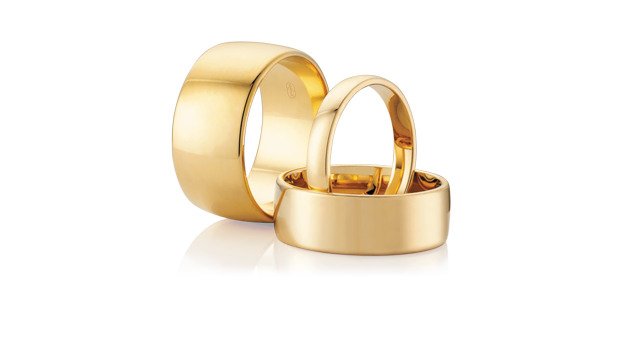
The best wedding band styles for wearing alone are designs that look complete on their own: plain bands, contoured bands, and diamond-set bands. A solo band has nothing beside it to share the visual weight, so it needs enough presence to hold the finger by itself.
Plain, Contoured and Diamond Bands
Plain bands are the classic solo choice. A plain band in yellow gold, white gold or platinum reads as deliberate and never dates.

Contoured bands curve to sit around an engagement ring. If you want the option to pair rings later, our guide to the contour wedding band versus straight band walks through how each sits on the finger.
Diamond bands suit people who want sparkle without a separate engagement ring. Our Twist band is a good example: 18ct white gold with 30 round diamonds totalling 0.45ct, designed as an alternative to a traditional band.
Watch out: diamond-set bands with stones running the full circumference cannot be resized easily. If there is any chance your finger size will change, ask about a sizing bar or a part-set design before you order.
Wedding Band Fit and Sizing When Worn Solo
Wedding band fit and sizing need more attention when a band is worn alone. A solo band sits directly against the skin with no second ring to steady it, so it moves more. Get the size right and you will barely notice it.
Start with these steps:
- Measure at the end of the day. Fingers are smallest in the morning and swell through the day.
- Measure twice, in different temperatures. Cold hands read smaller than warm ones.
- Check the knuckle. The band must pass the knuckle comfortably, then sit snug at the base.
- Account for width. Wider bands fit tighter, so a 6.5mm band may need a half size up from a 2mm band.
- Ask for a ring sizer. Measuring at home with a proper sizer gives a more accurate reading.
A band that spins freely is too loose. A band that leaves a deep mark after an hour is too tight.
Daily Wear, Care and Safety for a Solo Band
A band worn every day collects soap, hand cream, sunscreen, sweat and grit, which dulls the metal and hides the sparkle on a diamond band. A solo band also takes more direct contact with the skin and with whatever your hands touch, because there is no engagement ring above it to take the first knock. The care routine is simple, but it needs to match the metal and how you actually wear the ring.
Cleaning routine by metal and setting
A weekly clean takes minutes and keeps the band looking sharp:
- Warm water, a drop of mild dish soap, a soft brush, then rinse and pat dry. This is safe for yellow gold, white gold, platinum and palladium.
- Avoid harsh chemicals. Chlorine, bleach and abrasive cleaners can pit or discolour gold alloys and can weaken the solder in some settings. Remove the band before cleaning with chemicals or spending long periods in a pool or spa.
- White gold and rhodium plating. Most white gold bands are rhodium-plated to give them a bright white finish. The plating wears through with daily wear, typically over months to a couple of years depending on wear, and the band will start to look slightly warmer or yellower underneath. A jeweller can re-plate it. Ask about plating at the time of purchase so you know what to expect.
Watch out: if you wear a diamond band daily, have the setting checked by a jeweller at least once a year. Prongs that loosen gradually are easy to miss until a stone is gone, and replacing a small diamond is far cheaper than replacing a larger one that was never checked.
Wear, scratches and long-term maintenance
A solo band is in direct contact with the world in a way a stacked set is not. It will pick up fine scratches, and that is normal. What matters is knowing which wear is cosmetic and which needs attention:
- Fine surface scratches are cosmetic and can be polished out by a jeweller. Most people choose to leave them, because polishing removes a tiny amount of metal each time.
- Deep gouges or dents are worth having looked at, particularly on hollow or very thin bands, where a dent can compromise the structure.
- Thinning of the band happens over years of daily wear, especially on very slim bands. A band that started at 2mm can wear noticeably thinner over a decade or more of constant use. A slightly wider band wears more slowly and is a better long-term choice for solo wear.
Workplace, travel, exercise and safety
Sport and gym. Remove the band before lifting weights, rock climbing or any activity where the ring could catch or be crushed.
Travel. Leave the good band at home for overseas travel and wear a simpler band or a silicone substitute.
Medical situations. Remove rings before surgery or any procedure where swelling is likely, and tell staff if a ring cannot be removed.
A simple maintenance calendar
- Weekly: clean with mild soap and a soft brush.
- Monthly: check the setting on a diamond band by gently rocking each stone; if any moves, stop wearing it and see a jeweller.
- Yearly: professional check and clean, prong inspection on diamond bands, and a rhodium re-plate on white gold if needed.
The short version: clean weekly, check the setting regularly, remove the band for harsh tasks, sport, swimming and travel, and have it professionally checked once a year. A solo band worn with that routine will last decades.
A simple routine keeps a solo band looking sharp and catches wear before it becomes a problem.
| Frequency | Task | Note |
|---|---|---|
| Weekly | Clean with mild soap and a soft brush | Safe for gold, platinum and palladium |
| Weekly or fortnightly | Clean diamond-set bands more often | Cream and soap collect around stones |
| Monthly | Gently rock each stone on a diamond band | If any moves, see a jeweller |
| Yearly | Professional check, clean and prong inspection | Rhodium re-plate white gold if needed |
| Every few years | Review insurance valuation | Consider a polish if scratches bother you |
Choosing Your Solo Wedding Band at Starfire Jewellery
Choosing a solo band comes down to three decisions: metal, width and finish. At Starfire Jewellery, we make bands to order, so you are not limited to what sits in a display case.
Options include:
- Classic Wedders for a traditional plain band
- B- Wedding Band, a made-to-order band in 10ct yellow gold at 6.5mm width, priced at $660
- Luxe yellow band, an 18ct yellow gold band set with nine round diamonds totalling 0.78ct, priced at $4,500
Our founder Shweta Khan is a diamond specialist and jewellery designer with over 25 years in the diamond industry. Once you purchase from Starfire, we are also your jeweller for aftercare of your special jewellery.


Frequently Asked Questions
Can you wear a wedding band without an engagement ring?
Yes. Plenty of married people wear a wedding band alone, either from the start or after years of wearing a set. Nothing about the band's meaning depends on a second ring being present. The band signals commitment on its own, and many people find a single ring simpler for daily wear. If you are choosing a band to wear solo, look for one with enough width and presence to feel complete, such as a 4mm to 6mm plain band or a diamond band with a continuous setting.
Which hand should you wear a wedding band on?
In Australia, the usual placement is the ring finger of the left hand, following the long-standing custom that this finger carries the wedding ring. That said, it is a custom rather than a rule. Some people move the band to the right hand for work or comfort, and others wear it on a different finger entirely. If you are wearing a wedding band alone, pick the hand and finger that feel right and that suit your daily activities, then stay consistent so the sizing is accurate.
How should a wedding band fit when worn alone?
A solo band should slide over the knuckle with slight resistance and sit snugly at the base of the finger without pinching. Because there is no engagement ring to hold it in place, fit matters more than when the rings are worn together. Aim for a band that does not spin freely or lift off when your hand is cold. Have your finger measured at the end of the day, when it is at its largest, and ask for a ring sizer if you are ordering remotely.
What styles of wedding bands look good on their own?
Bands with a bit of visual weight work best solo. Plain bands in 18kt gold or platinum at 4mm to 6mm read as deliberate rather than incomplete. Diamond bands, such as a round-brilliant set in yellow gold or a twist design, add sparkle without needing a partner ring. Contoured bands are usually designed to sit against an engagement ring, so check how a contoured shape looks alone before committing. Try the band on with your everyday jewellery to see how it pairs.
Wearing one ring instead of two is a choice, not a compromise, and it deserves a band designed for it. If you are ready to choose a band that looks complete on its own, get started with Starfire Jewellery and book a consultation with our team to design a solo band made for your hand.

Related post

How Many Ring Design Revisions Are Included in a Custom Ring

7 Steps to Choosing an Ethically Sourced Anniversary Necklace

7 Steps to Design Your Own Engagement Ring Online

What Diamond Carat Size Looks Best on Your Hand

Best Ethical Engagement Rings Australia: A Practical Buying Guide
